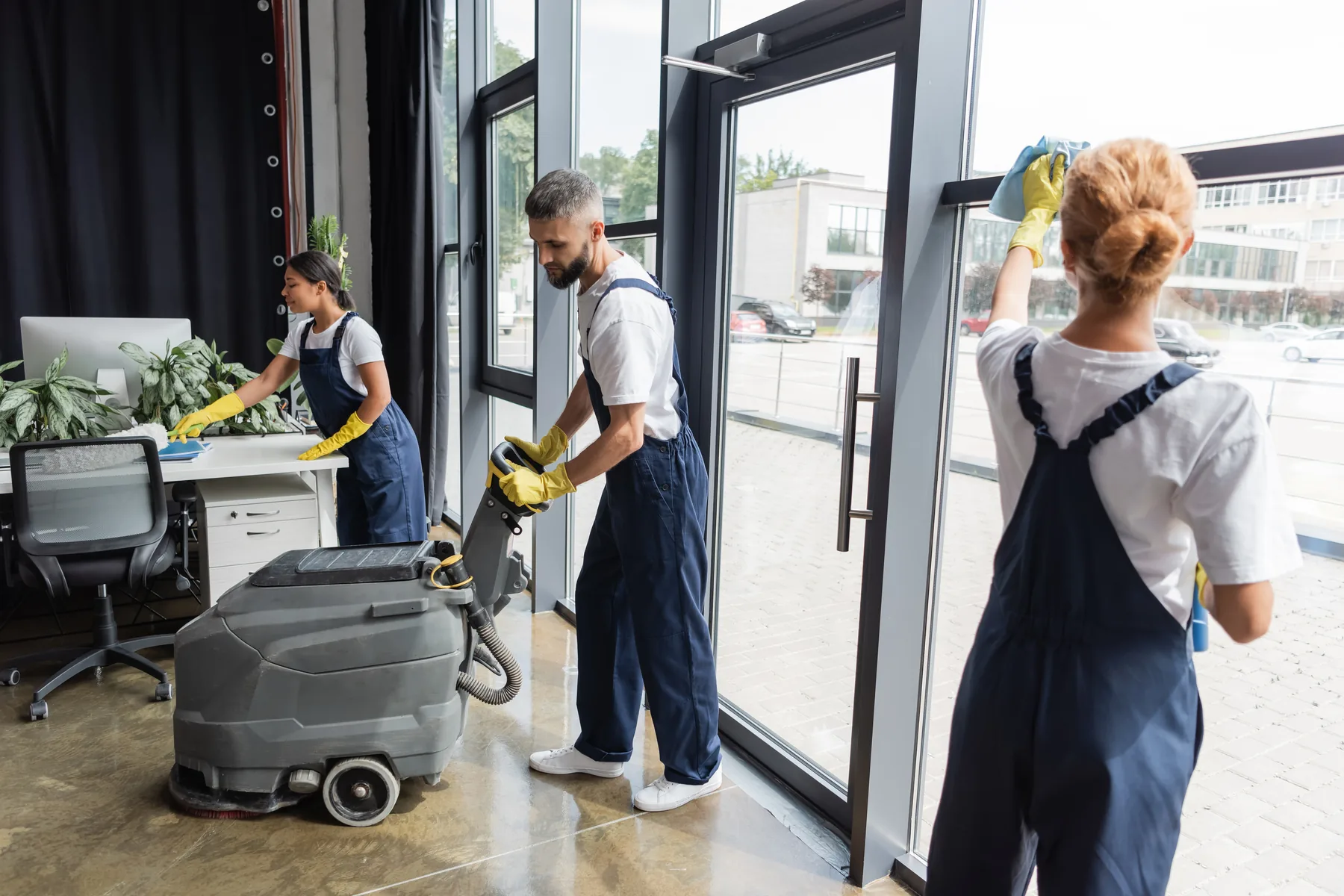
Whether you're a contractor, cleaner, or consultant, a single claim can cost more than your annual revenue. General Liability keeps your business standing.
Illustrative photograph, not a picture of our own work. Adobe Stock.
What this is
General Liability answers for the harm your business does to other people and to their property. A customer slips on a floor you just mopped. A tool goes through a window. Someone says the work you did caused them a loss.
It also pays to defend you when the claim turns out to be wrong, and that is the part people underestimate. Defence costs arrive whether or not you did anything, and for a small business they are often the larger number.
Who it's for
You work inside other people's homes, offices or buildings
You are a contractor, cleaner, landscaper, handyman or mover
A lease, a client or a general contractor requires it from you in writing
You are about to sign a contract with an insurance clause you have not read closely
How we work on it
We look at where your work physically happens and who is standing near it, because that is what this coverage turns on. If a contract is driving the decision, bring the contract. It is faster to read the requirement than to guess at it, and it is the only way to know whether what you already carry satisfies it.
Common Questions
Questions about this service
01My client sent a contract with an insurance requirement I do not understand.
Bring it in. Those clauses name a coverage type, a limit, and often ask to be added to your policy as an additional insured. We read it with you and tell you plainly whether what you have already satisfies it, before you sign rather than after.
02Does this cover my own tools if they are stolen?
No. General Liability answers for harm to other people and their property, not for your own equipment. Tools are a separate question with a separate answer. If that is your main worry, say so at the start and we will treat it as its own item.
03I work alone. Do I still need it?
Having no employees removes the Worker's Compensation question. It does not remove this one, because this coverage is about the people around your work rather than the people on your payroll. A solo cleaner in a client's home carries the same slip and damage exposure as a crew of six.
Simple Process
Three steps to the right coverage.
No jargon. No pressure. Just a clear path to protecting what matters.
01STEP 01
Tell us about your situation.
We start with a conversation in English, Portuguese or Spanish, so we understand your life, your business, and what you actually need. No forms to fill out before we talk.
02STEP 02
We find the right coverage.
Based on your situation, we compare options, explain the differences in plain language, and recommend what makes sense, never what pays us the most commission.
03STEP 03
You're protected. We stay close.
Once you're covered, we don't disappear. As your life changes, we review your coverage and adjust it. A new employee, a new vehicle, a new chapter.
Your employees are your biggest asset. Worker's Comp protects your business and your people when workplace injuries happen, so you stay compliant and covered.
Registration without the headache. We handle the paperwork for your car, truck, or commercial vehicle. In English, Portuguese or Spanish, at your convenience.
Ride and splash with confidence. We arrange tailored coverage for motorcycles, jet skis, and recreational vehicles. Your weekends get the same protection as your weekdays.
Not sure what you need? Start here. We sit down with you, review your current situation, and map out the coverage that actually makes sense for your life and budget.